In short
- The Bala 2 project (Danube, Bala branch, near Cernavoda) has updated technical-economic indicators, approved by the Technical-Economic Council of AFDJ Galati on 28 September 2026.
- Next steps, as stated by AFDJ: approval by the Technical-Economic Council of the Ministry of Transport and Infrastructure, issue of the budget line, then launch of the design-and-build tender.
- Last approved value: RON 1.02bn incl. VAT (approx. EUR 196m), at February 2023 prices, under GD 1079/2024. The updated value has not been published.
- Duration in the approved indicators: 60 months (12 months design, 48 months execution), 36-month warranty.
- Two previous tenders failed: no bidders in October 2024, one bidder in March 2025, cancelled in July 2025 for lack of financing.
EUR values converted at RON 5.2/EUR, rounded. Indicative only.
This is a pipeline signal, not a tender notice. For hydrotechnical and river-works contractors, it is the moment to decide whether to prepare for the third procedure, and with whom.
1. What the Bala 2 project is
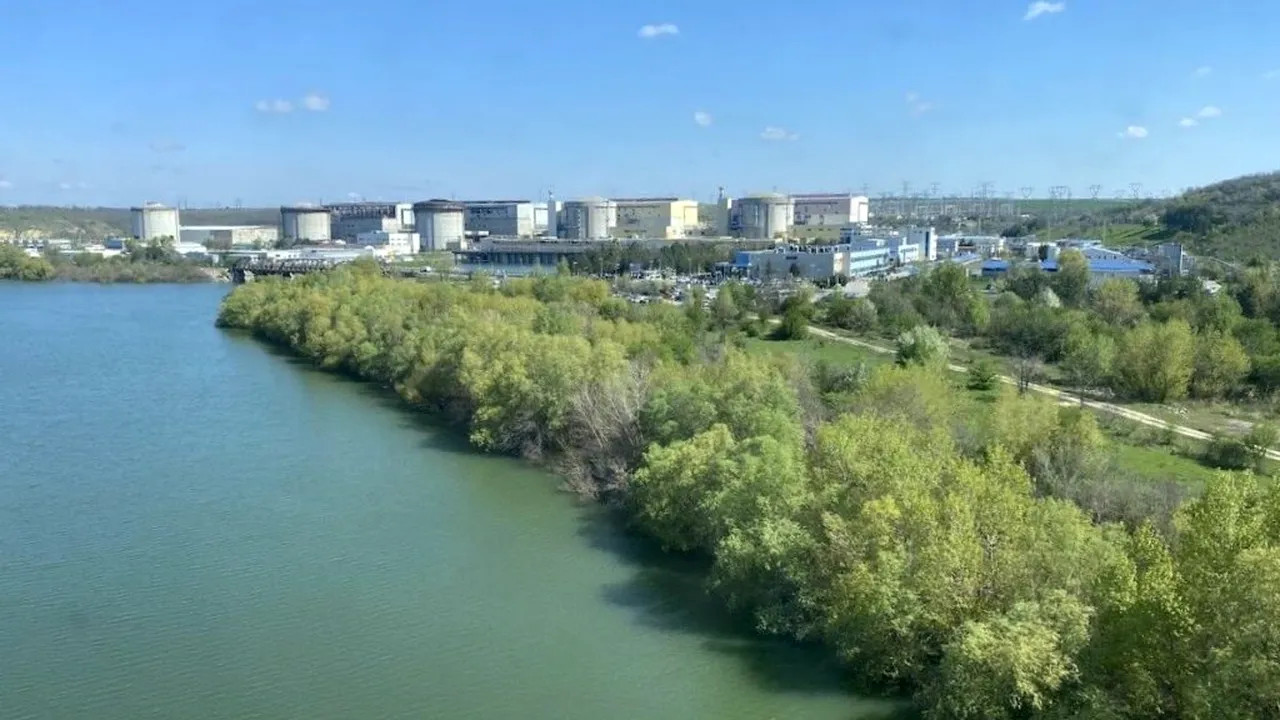
The Bala branch is where the Danube splits near Cernavoda. Over the years, more water has flowed through Bala and less through the Old Danube (Dunarea Veche), the arm that serves navigation and the cooling water intake of the Cernavoda nuclear power plant.
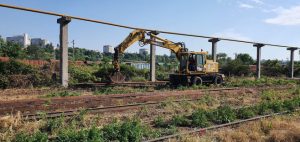
Bala 1, executed under a 2009 FIDIC Red Book contract and received in 2016, was meant to correct this with a bottom sill. After objections from environmental organisations, the sill was built at a lower elevation than designed, and the effect was limited. This is the account given by AFDJ Galati in its public chronology.
Bala 2 is the follow-up: “restoration and renaturalisation of the Bala bifurcation zone for navigation conditions and environmental protection”. According to AFDJ, nine technical alternatives were assessed, and the chosen solution was modelled in 2D, 3D hydrodynamic and quasi-3D morphodynamic simulations over a 50-year horizon.
The expected effects, as published in the approved indicators:
| Indicator | Value |
|---|---|
| Flow increase towards the Old Danube | approx. 168% |
| Water level rise | up to 1.20 m |
| Current velocity increase | approx. 0.3–0.5 m/s |
| Cooling water availability for the four Cernavoda reactors | over 97% |
The nuclear angle is what moved the project back up the agenda. In summer 2026 low Danube flows affected the plant’s operation, Romania entered an energy alert, and on 31 July the Government asked the Ministry of Transport to put Bala 2 back on the priority list.
2. What happened between August and September 2026
Economedia published on 2 October 2026, citing AFDJ Galati, the following sequence:
| Date | Step |
|---|---|
| 11 Aug | AFDJ, Ministry of Transport and EIB PASSA discuss accelerating implementation |
| 14 Aug | Interministerial Committee BALA set up by Prime Minister’s decision: technical solutions, updated indicators, implementation calendar, financing sources |
| 2 Sept | AFDJ, CNE Cernavoda, SNN and EnergoNuclear discuss data for updating the 2D/3D hydrodynamic model |
| 7 Sept | Project Implementation Unit requests a meeting on the tender documentation (caiet de sarcini), to prepare restarting the design-and-build procedure |
| 14 Sept | AFDJ and the Ministry review the updated tender documentation, including changes on site: four stone-laden barges sunk and the Parjoia rock detonated |
| 15 Sept | Order signed for revision of the general estimate (deviz general) |
| 18 Sept | Draft tender documentation sent to the Ministry |
| 22 Sept | Revised general estimate received by AFDJ |
| 28 Sept | Updated indicators approved by AFDJ’s Technical-Economic Council |
AFDJ’s statement on what follows: approval in the Ministry’s CTE, then the budget line, then the tender for design and execution. No dates were given.
3. Why the two previous tenders failed, and why that matters now
AFDJ’s own chronology, as reported by Mediafax, gives two data points that bidders should weigh:
- 1 October 2024: bid opening, zero offers. The procedure was restarted.
- 10 March 2025: one offer received. On 17 July 2025 the procedure was cancelled because no financing source was secured. The EU funding application had been filed on 31 January 2024 under the Transport Programme 2021–2027 and was still under evaluation.
Two readings follow. First, the market did not see this as an attractive contract at the 2023 price level and a 60-month duration: a complex river-works job with environmental constraints, a single prime contract, and a history of NGO challenges. Second, the authority had never secured the money before tendering.
What is different in the third attempt is the financing pressure, not the technical scope. The Interministerial Committee has financing on its mandate, the EIB’s PASSA advisory unit is in the room, and the project now carries an energy-security justification that it did not have in 2024. Whether this converts into a budget line before the notice is published is the question to watch. We have no information on that.
4. What the tender is likely to look like
Caution: the documentation has not been published. What follows is based on the previous procedures and the approved indicators, and must be checked against the notice when it appears.
- Contract type: design and build, one contract, with AFDJ Galati as contracting authority (Law 98/2016 or, if AFDJ procures as a utility operator, Law 99/2016 — check the notice).
- Scope: hydrotechnical river works at the Bala bifurcation (sill and channel works, dredging, bank protection), with the 2D/3D model being updated, so design inputs will have moved since 2023.
- Value: the 2023 estimate was RON 1.02bn incl. VAT. The revised general estimate exists but has not been published. Given construction cost inflation since February 2023, expect the estimated value excluding VAT to be above the previous figure. Do not price from the old number.
- Qualification, by analogy with the previous procedures: similar experience in hydrotechnical or port/river works of comparable value; key experts in hydraulic engineering and environmental management; a design team with river-modelling capability. The previous tender documents are the best proxy and are still retrievable from SEAP.
- Risks to price in: environmental conditions attached to the 2023 environmental accord, works in a Natura 2000 area, seasonal navigation and flow constraints, and the possibility of a renewed NGO challenge.
5. What foreign bidders should do now
- Pull the 2024 and 2025 SEAP documentation for the two cancelled procedures. The qualification criteria and the contract form will likely be carried over with limited changes.
- Decide on a local partner early. With no bidders in 2024 and one in 2025, a credible association between a foreign dredging/hydrotechnical contractor and a Romanian civil-works firm with Danube experience would face limited competition.
- Track three signals: the Ministry CTE approval, the budget line (fila de buget), and any Government decision updating GD 1079/2024. The tender cannot be launched before the second of these.
- Ask for the updated value as soon as it is public. Everything else in the bid-or-no-bid decision depends on it.
M Infra Design & Management supports international contractors and engineering groups with tender management, design coordination and construction supervision on Romanian public contracts, including port and waterway infrastructure.